
How Many People Worldwide Live With Mental Disorders?
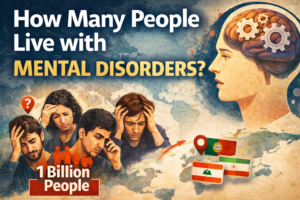
In this article, I share scientific data and findings from recent global research on how many people worldwide live with mental disorders, the percentage affected, and which countries show the highest prevalence levels.
📊 1. What Percentage of the World’s Population Lives With Mental Disorders?
Global health research and epidemiological reports show that:
-
Nearly 1 billion people worldwide live with one or more mental disorders (such as depression, anxiety, bipolar disorder, or schizophrenia).
This represents approximately 13–14% of the global population. -
Other large-scale studies estimate that 1 in every 6 people will experience at least one mental disorder at some point in their lives.
-
Overall conclusion:
👉 Around 13–20% of the world’s population experiences a mental health disorder at least once during their lifetime.
These figures come mainly from global burden of disease studies and international health surveillance systems.
🌍 2. Which Countries Have the Highest Rates of Mental Disorders?
Global health data indicates that mental disorder prevalence varies significantly by country, influenced by conflict, economic pressure, healthcare access, and reporting systems.
Based on age-standardized prevalence estimates (a method that adjusts for population age differences to allow fair comparison), countries often cited with higher estimated prevalence include:
-
Portugal
-
Iran
-
Lebanon
These estimates are reported in large international datasets such as those used by global health research institutions (including sources aligned with healthdata.org).
Additional regional observations:
-
Countries in Australasia and North America (such as the United States and Canada) often report higher rates of diagnosed mental disorders.
-
This does not always mean higher true disease burden, but rather:
-
Better access to diagnosis
-
Stronger mental health reporting systems
-
Greater public awareness and willingness to report symptoms
-
🧠 3. Key Facts for Understanding Global Mental Health
-
Depression and anxiety disorders are the most common mental disorders worldwide.
-
Approximately 82% of people living with mental disorders reside in low- and middle-income countries.
-
High-income countries usually report more cases, not necessarily because they have more illness, but because they have:
-
Better screening
-
More mental health professionals
-
Stronger data collection systems
-
-
Mental disorders are among the leading causes of disability worldwide, measured as Years Lived With Disability (YLDs).
-
Mental illness significantly reduces:
-
Work productivity
-
Educational outcomes
-
Social functioning
-
Overall quality of life
-
📌 Simple Social Summary
Global Snapshot
-
13–20% of the world’s population experiences a mental disorder at least once in life.
-
Around 1 billion people are currently living with mental health conditions.
Countries with Higher Reported Rates
-
Portugal, Iran, Lebanon (based on age-standardized global estimates).
Most Common Disorders
-
Depression
-
Anxiety disorders
Overall Impact
Mental disorders are among the top global causes of reduced quality of life, lost productivity, and long-term disability.
📍 In the next discussion, God willing, I will examine the main causes of mental disorders by country and how social, economic, and environmental factors shape mental health outcomes worldwide.
#ResearchExcellence #PublicAwareness
#HealthyLiving #HealthyLifestyle
#MentalHealthFacts
#PleaseShare
Nagala Soo Xiriir
contact@xogbaahin.com-
“Horn of Africa Ports: A Key Driver of Regional Trade and Economic Growth”March 13, 2026
-
Security Developments in the Horn of Africa 2026: Stability, Cooperation, and ChallengesFebruary 24, 2026
-
Global Powers and Africa in 2026: Strategic Competition and Economic OpportunityFebruary 19, 2026
-
The Digital Economy in 2026: Innovation, Remote Work, and Global OpportunitiesFebruary 17, 2026
-
Global Energy Markets in 2026: Oil Price Volatility and Economic ImpactFebruary 16, 2026
-
The Future of Global Technology in 2026: Innovation, Risks, and OpportunitiesFebruary 15, 2026
-
Rising Tensions in the Middle East: Causes, Global Impact, and What Comes NextFebruary 14, 2026
-
Life Pressure and Mental StressFebruary 6, 2026
-
Building a Value-Based SocietyFebruary 6, 2026
-
How Many People Worldwide Live With Mental Disorders?February 6, 2026
-
Mental Decline / Cognitive DeclineFebruary 6, 2026
-
Life Organization: Mental Freedom, Not Rigid SchedulesFebruary 2, 2026
-
Self-StudyFebruary 1, 2026
-
Types of Stress: A Scientific PerspectiveJanuary 31, 2026
-
“Even If I Lose Everything, I Still Have You”January 31, 2026
-
Marriage Among Somali WomenJanuary 31, 2026