
Types of Stress: A Scientific Perspective
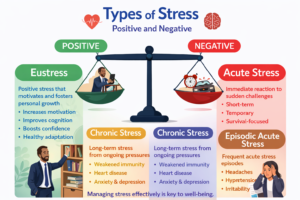
Stress is a natural response of the body and mind to pressure, danger, challenges, or significant changes that create psychological strain. Scientific research in health and psychology shows that stress is not always harmful; rather, it exists in different forms, each with distinct effects on human well-being.
This article provides a scientific overview of four major types of stress:
-
Acute Stress
-
Chronic Stress
-
Episodic Acute Stress
-
Eustress
1. Acute Stress
Acute stress is short-term stress that arises suddenly from unexpected events or brief situations such as accidents, exams, sudden conflicts, or urgent decision-making. This type of stress is temporary, and the body typically returns to its normal state once the triggering situation ends.
From a scientific perspective, acute stress activates hormones such as adrenaline and cortisol, which increase alertness and prepare the body for action. When experienced at moderate levels, acute stress does not cause serious health problems and can sometimes help individuals respond effectively to immediate challenges.
2. Chronic Stress
Chronic stress is long-term stress resulting from persistent pressures such as poverty, excessive workload without rest, family problems, or prolonged insecurity. This type of stress is considered the most dangerous due to its severe impact on physical and mental health.
Scientific studies have linked chronic stress to:
-
Weakened immune function
-
Cardiovascular diseases
-
Persistent anxiety and depression
-
Sleep disorders and memory impairment
Chronic stress disrupts the body’s internal balance (homeostasis), leading to a significant decline in overall quality of life.
3. Episodic Acute Stress
Episodic acute stress is a form of acute stress that occurs repeatedly. It is commonly seen in individuals who live fast-paced, highly pressured lifestyles or take on excessive responsibilities. Such individuals often feel as though life is constantly rushed and overwhelming.
Scientifically, repeated acute stress can gradually develop into chronic stress if not properly managed. It may result in frequent headaches, high blood pressure, irritability, and persistent mental fatigue.
4. Eustress (Positive Stress)
Eustress is a positive form of stress that motivates individuals and supports growth, creativity, and high performance. Examples include stress related to pursuing success, healthy competition, or starting a new project.
Research shows that eustress:
-
Increases motivation
-
Enhances cognitive performance
-
Builds self-confidence
-
Helps individuals adapt to life’s challenges
The key difference between eustress and other forms of stress is that eustress does not harm health. Instead, it represents a controlled and beneficial level of stress.
Conclusion
Stress is an unavoidable part of human life, but understanding its different types is essential for effective management. Acute stress and eustress can be beneficial when experienced in moderation, while chronic stress and episodic acute stress pose serious risks to mental and physical health if left unmanaged.
Identifying the type of stress one is experiencing and applying healthy coping strategies is crucial for maintaining overall well-being.
Short Question
Which of these four types of stress do you experience most often?
Nagala Soo Xiriir
contact@xogbaahin.com-
“Horn of Africa Ports: A Key Driver of Regional Trade and Economic Growth”March 13, 2026
-
Security Developments in the Horn of Africa 2026: Stability, Cooperation, and ChallengesFebruary 24, 2026
-
Global Powers and Africa in 2026: Strategic Competition and Economic OpportunityFebruary 19, 2026
-
The Digital Economy in 2026: Innovation, Remote Work, and Global OpportunitiesFebruary 17, 2026
-
Global Energy Markets in 2026: Oil Price Volatility and Economic ImpactFebruary 16, 2026
-
The Future of Global Technology in 2026: Innovation, Risks, and OpportunitiesFebruary 15, 2026
-
Rising Tensions in the Middle East: Causes, Global Impact, and What Comes NextFebruary 14, 2026
-
Life Pressure and Mental StressFebruary 6, 2026
-
Building a Value-Based SocietyFebruary 6, 2026
-
How Many People Worldwide Live With Mental Disorders?February 6, 2026
-
Mental Decline / Cognitive DeclineFebruary 6, 2026
-
Life Organization: Mental Freedom, Not Rigid SchedulesFebruary 2, 2026
-
Self-StudyFebruary 1, 2026
-
Types of Stress: A Scientific PerspectiveJanuary 31, 2026
-
“Even If I Lose Everything, I Still Have You”January 31, 2026
-
Marriage Among Somali WomenJanuary 31, 2026