


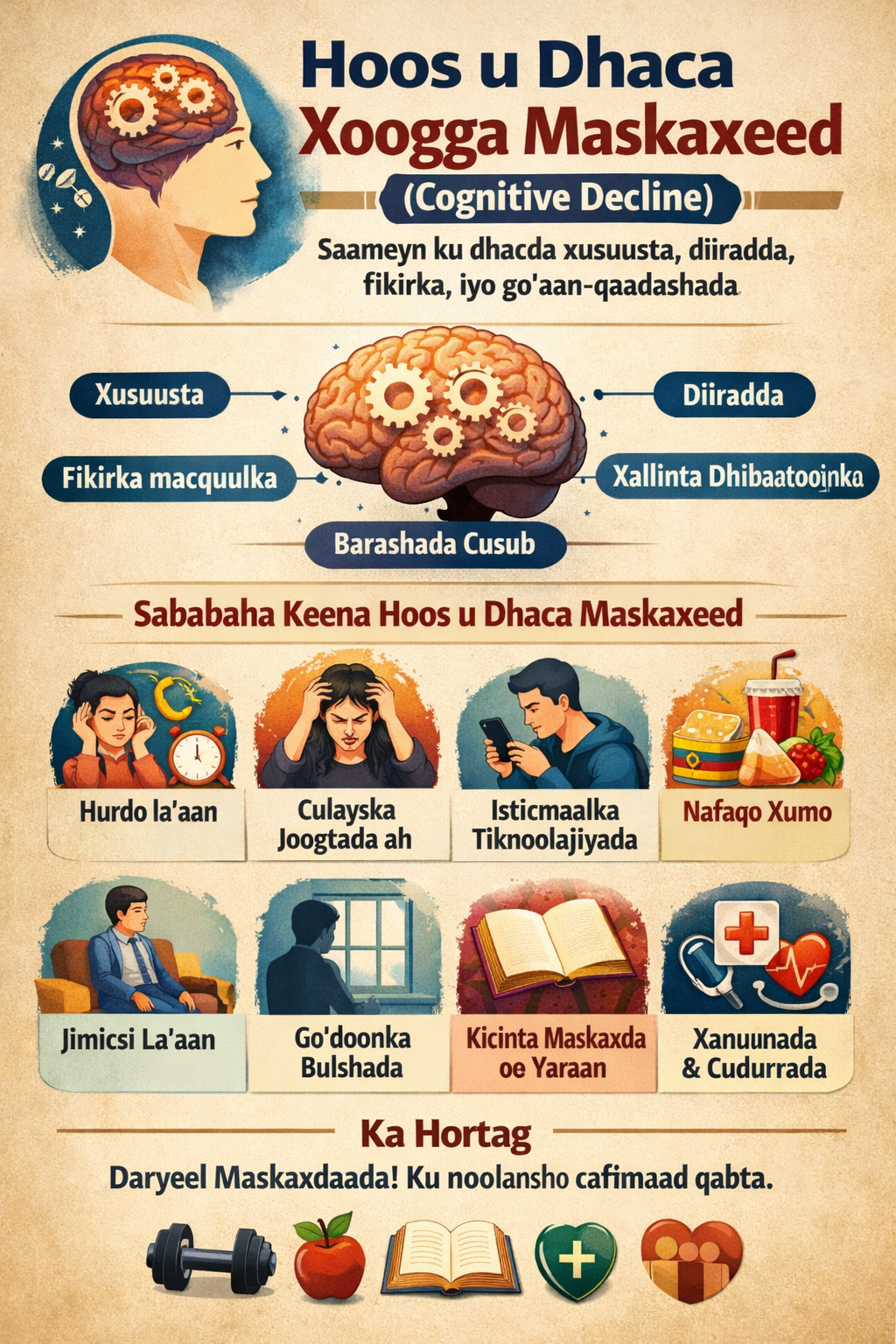

Mental decline (cognitive decline) is a gradual condition that affects mental abilities such as memory, focus, comprehension, decision-making, and problem-solving. This issue is not limited to older adults only; it can affect anyone if there are factors that cause or accelerate the decline in brain function.
In this text, you will find a detailed, scientific-style explanation.
The brain is the most important center that governs thinking, emotions, memory, and behavior. The quality of brain function directly affects education, work, social relationships, and overall lifestyle. However, many studies show that cognitive decline is increasing, especially in the modern era due to rising life stress, heavy use of technology, and unhealthy lifestyles.
What is Mental (Cognitive) Decline?
Mental decline is a reduction in cognitive functions such as:
-
Memory
-
Attention
-
Logical reasoning
-
Problem-solving
-
Ability to learn new things
It may begin subtly and go unnoticed, but if the underlying causes are not understood and addressed, it can develop into a serious problem that affects a person’s daily life.
Causes of Mental Decline
1. Lack of sleep and poor sleep quality
Sleep is the time when the brain reorganizes and resets. When sleep is insufficient:
-
Memory weakens
-
Focus decreases
-
The brain cannot properly store information
Research shows that sleeping less than 6 hours per night directly reduces cognitive performance.
2. Chronic stress
Ongoing stress increases the hormone cortisol, which:
-
Damages the hippocampus (the memory center)
-
Reduces focus
-
Increases forgetfulness
Chronic stress is one of the main causes of cognitive decline among young people.
3. Excessive use of technology
Heavy use of smartphones, social media, and constant gaming leads to:
-
Fragmented attention and reduced mental patience
-
Decline in deep reading and critical thinking
The brain adapts to “fast dopamine,” making tasks that require deep thinking more difficult.
4. Poor nutrition
The brain requires specific nutrients such as Omega-3, B vitamins, iron, and antioxidants.
Processed foods, excessive sugar, and fast food damage brain function and increase the risk of forgetfulness and mental fatigue.
5. Lack of physical exercise
Exercise increases blood flow to the brain and:
-
Promotes brain cell growth
-
Improves memory
-
Reduces stress
People who do not exercise are more vulnerable to cognitive decline.
6. Social isolation
The brain thrives on social interaction. When a person:
-
Becomes isolated
-
Has limited conversation
-
Experiences reduced social connections
Mental activity decreases, leading to cognitive decline.
7. Lack of mental stimulation
The brain is like a muscle—if it is not used, it weakens. Causes include:
-
Lack of reading
-
Lack of challenges
-
Minimal learning of new skills
-
A monotonous, unstimulating lifestyle
8. Mental and physical illnesses
Conditions such as:
-
Depression
-
Anxiety
-
Diabetes
-
High blood pressure
-
Neurological disorders