The Role of Role Models, Positive Motivation, and Direct Impact
The progress and resilience of any society are directly tied to the quality of values practiced by its people. Choosing to follow and promote good behavior instead of harmful conduct is a central pillar in building a society grounded in ethics and responsibility.
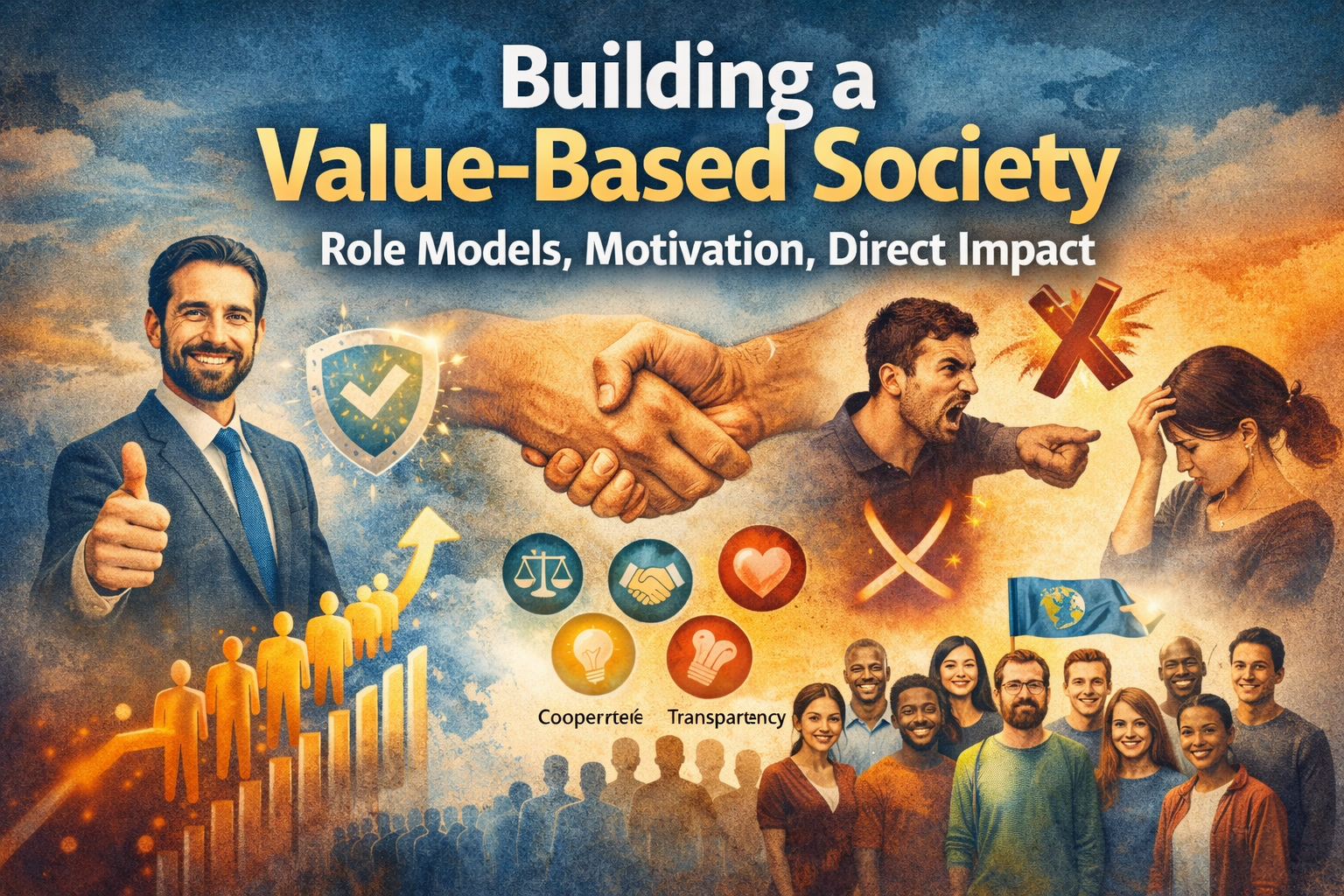
Positive role models shape behavior. When people are encouraged to imitate integrity, honesty, and responsibility, society becomes stronger. In contrast, normalizing harmful actions gradually erodes trust, weakens social cohesion, and damages collective responsibility.
Promoting good conduct—rather than spreading or normalizing negative behavior—raises moral awareness, personal accountability, and mutual respect within society. When individuals actively encourage positive actions, they play a visible role in reducing destructive practices and fostering a healthier social environment.
A person’s true value is measured by the impact they leave on their community. Positive influence—such as honesty, patience, cooperation, transparency, and compassion—creates a constructive chain effect that carries forward from one generation to the next. On the other hand, unchecked negative influence leads to social breakdown, conflict, and loss of trust.
Conclusion
Social progress does not occur by chance. It requires choosing goodness, promoting positive action, and ensuring that every individual leaves behind a constructive legacy. This responsibility is not limited to leaders alone; it rests on every member of society. Only through shared moral responsibility can a society be built on ethics, justice, and sustainable development.